
TECHNOLOGY → PULSE PLATFORM
VRU performance data your team will actually use.
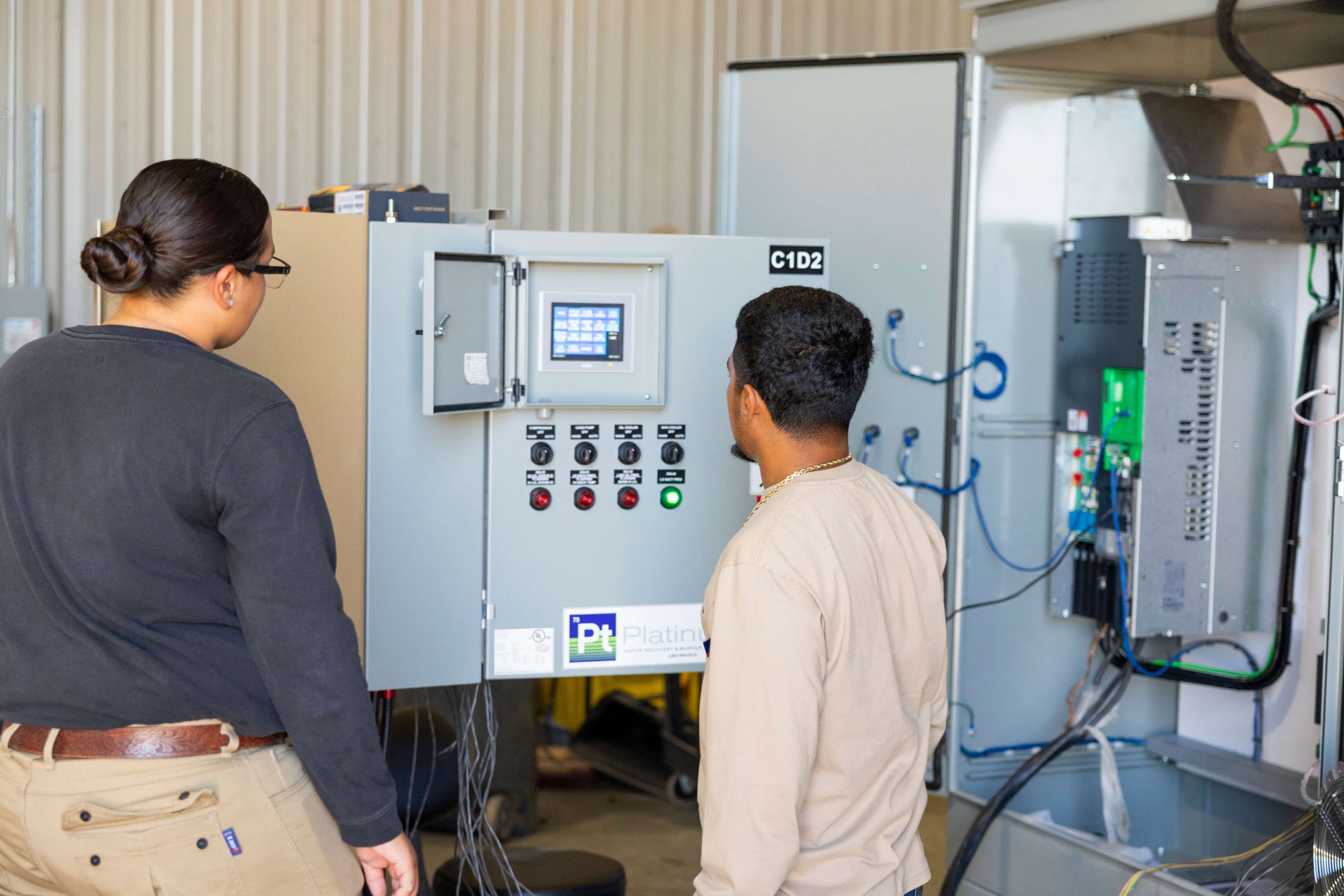
PULSE gives your team and Platinum Control a shared view of VRU runtime, uptime, compressor health, alarms, operating conditions, and maintenance history.
Oilfield data only matters when it helps people predict and act. PULSE connects telemetry to the field conditions that affect vapor recovery performance, so operators, engineers, technicians, and compliance teams can work from the same operating picture.
RUNTIME
Know when the VRU is running
AVAILABILITY TRACKING
Identify patterns over time
COMPRESSOR HEALTH
Track performance indicators
ALARMS & FAULTS
Surface issues earlier
MAINTENANCE HISTORY
Connect service to operating data
THE VISIBILITY GAP
Beyond “it’s working”
or, “it’s not working”
Most operators find VRU issues after the damage is done: downtime logged, gas lost, alarms stacked, service calls repeated.
PULSE closes that gap. Operators and Platinum see the same signals in real time, so the conversation shifts from “what happened?” to “what do we do next?”
WHAT PULSE SEES
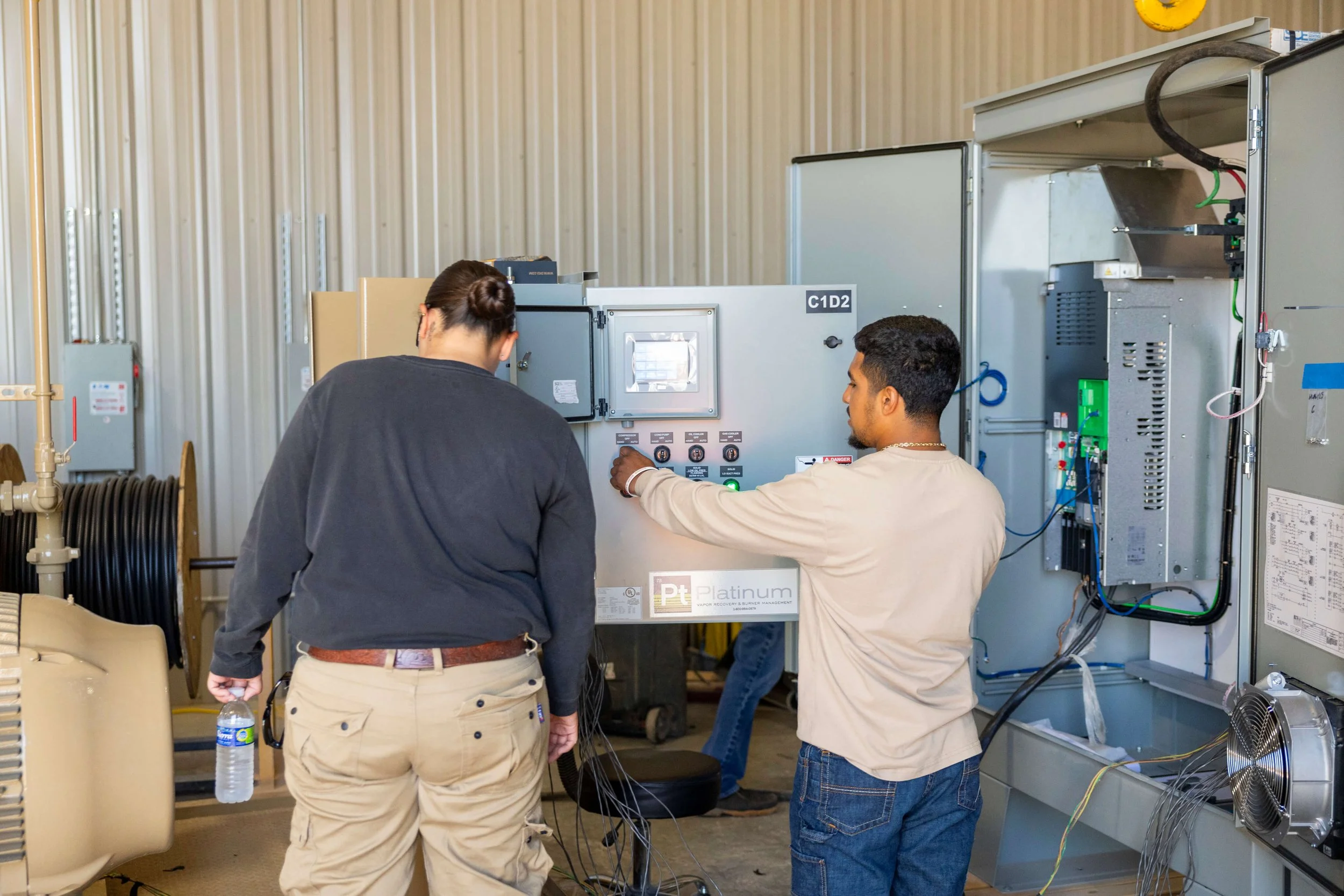
The operating data behind VRU performance.
What is a HSA?
See whether each unit is running, cycling, idle, or down – right now.
Alarm and fault conditions
Use alarm visibility to shorten the path from issue detection to dispatch to diagnosis.
Uptime
Track availability patterns over time and use the data to support performance conversations.
Operating conditions
Review the conditions surrounding performance changes, trips, or recurring issues.
Compressor health indicators
Monitor signals that help teams understand compressor condition and performance context before they become failures.
Maintenance history
Tie service history to operating data that triggered it so that teams can see what changed, when, and what was done about it.
FROM VISIBILITY TO ACTION
Data should shorten the time between issue and response.
Earlier issue detection
PULSE surfaces performance changes as they happen, not after a field complaint.
Better dispatch context
When a tech rolls to the site, they already know what changed and what to look at.
Faster diagnosis
Operators and Platinum service techs can review the same data instead of starting from separate assumptions.
Monthly performance conversations
Uptime, availability, and maintenance data give both teams a structured basis for account reviews.
Root-cause review
Recurring issues are reviewed against operating data and service history, not just reset and repeat.
SHARED PERFORMANCE VIEW
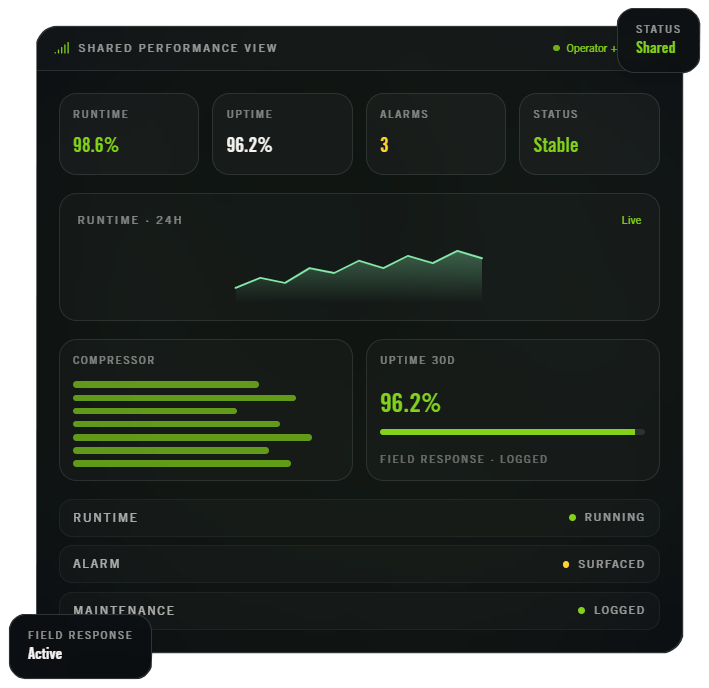
Operators see the same data Platinum sees.
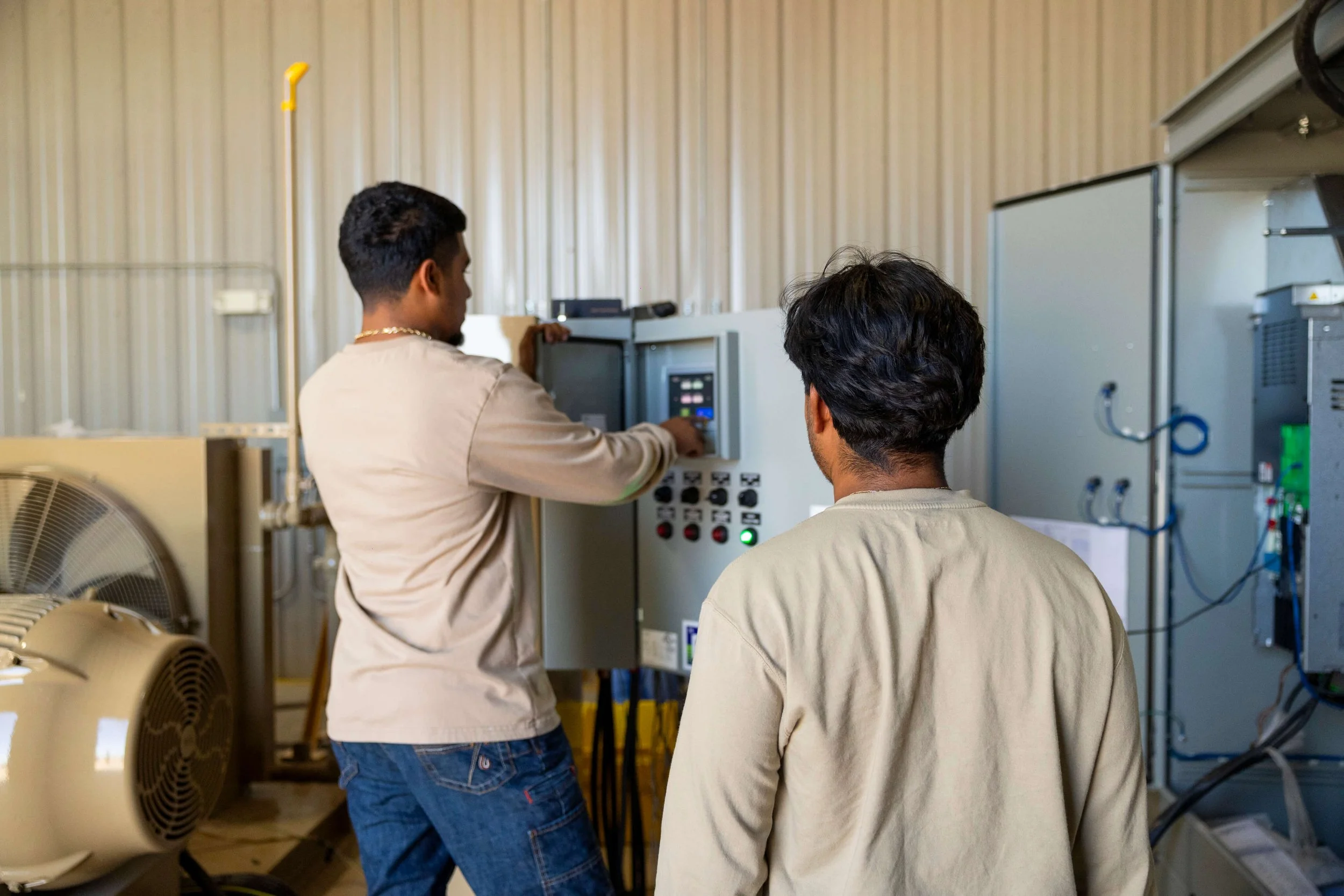
PULSE puts your team and Platinum on the same page – literally. Equipment status, operating conditions, alarms, maintenance records, and field response are visible to both sides.
When both teams can see the same performance signals, it becomes easier to make better, more informed, and quicker decisions about uptime, capture, service, resizing, reconfiguration, or replacement.
FAQ
PULSE questions
operators ask.
-
PULSE is Platinum Control’s telemetry and performance visibility software for VRUs. It gives operators and Platinum a shared view of runtime, uptime, compressor health, alarms, operating conditions, and maintenance history.
-
PULSE helps operators see performance signals that are often missed or delayed in manual workflows. It connects equipment data, alarm history, compressor health indicators, and service records into a clearer operating picture.
-
PULSE tracks VRU runtime, uptime, compressor health indicators, alarm and fault conditions, operating conditions, and maintenance history tied to operating data.
-
PULSE gives teams earlier visibility into runtime changes, alarms, and operating patterns that may indicate downtime or degradation. That makes it easier to investigate before the issue becomes a larger production, capture, or service problem.
-
PULSE tracks compressor health indicators and related operating context, helping teams better understand whether a unit is operating normally, drifting, alarming, or requiring field review.
-
No. PULSE is a shared performance view between the operator and Platinum. The value is not only seeing data; it is using that data to support diagnosis, field response, root-cause review, and better operating decisions.
-
PULSE supports emissions performance conversations by giving operators clearer runtime, service history, and operating data tied to vapor recovery performance. It helps teams gain a clearer view of how VRU performance relates to emissions exposure and documentation. -
PULSE helps surface operating signals that inform diagnosis, dispatch, maintenance, and root-cause conversations. The goal is to help operators and Platinum move from visibility to action.
GET STARTED
See what your VRUs are trying to tell you.
If your team is relying on manual checks, stale alerts, incomplete maintenance history, or disconnected performance data, start with a PULSE visibility review.